Lesson 20: Nunchaku Combat vs Freestyle: Know the Difference
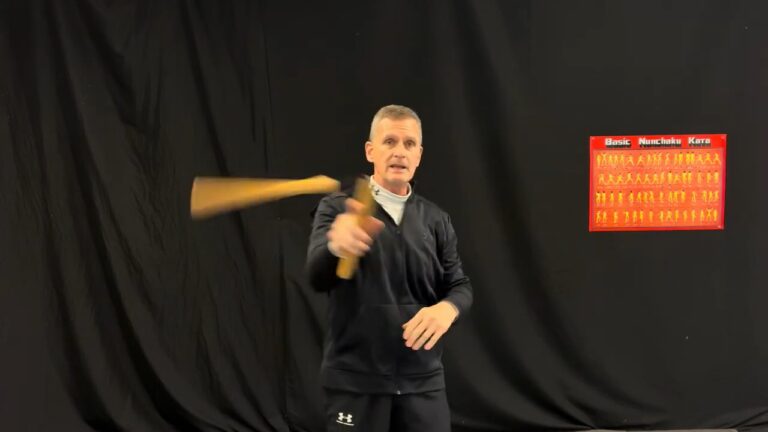
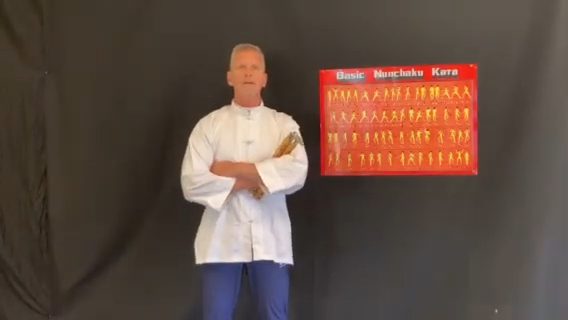
Understanding nunchaku combat vs freestyle, and knowing which one you're doing at any given moment is the first and foremost thing to keep in mind in the study of the nunchaku.
Master the Art of Nunchaku for Free
Master the Art of Nunchaku for Free
Understanding nunchaku combat vs freestyle, and knowing which one you're doing at any given moment is the first and foremost thing to keep in mind in the study of the nunchaku.
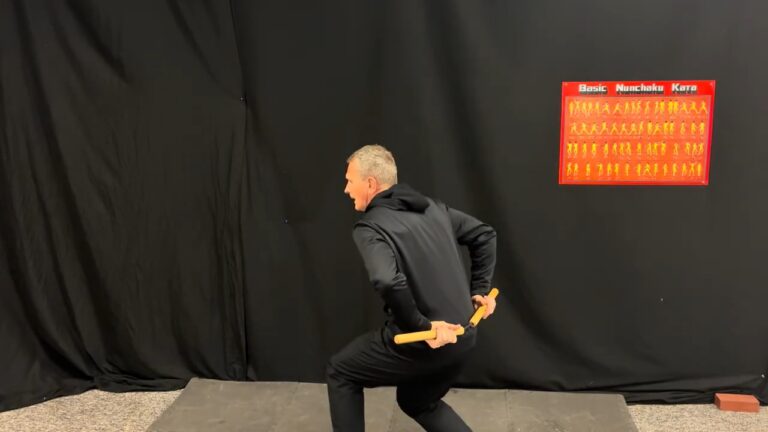
Lesson 19 is all about nunchaku body movement, and it starts by naming a habit that holds a lot of practitioners back: standing in one place and swinging the sticks without moving the body.
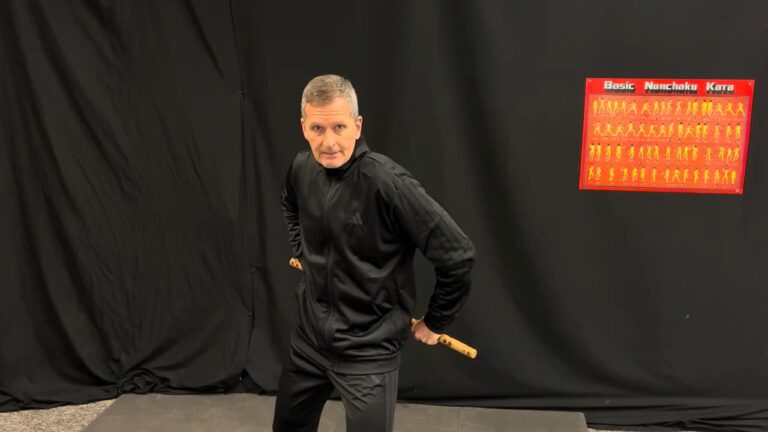
Break down an advanced nunchaku combination: a palm bounce, grip change, and 360-degree body spin that pours centrifugal power into your sticks.
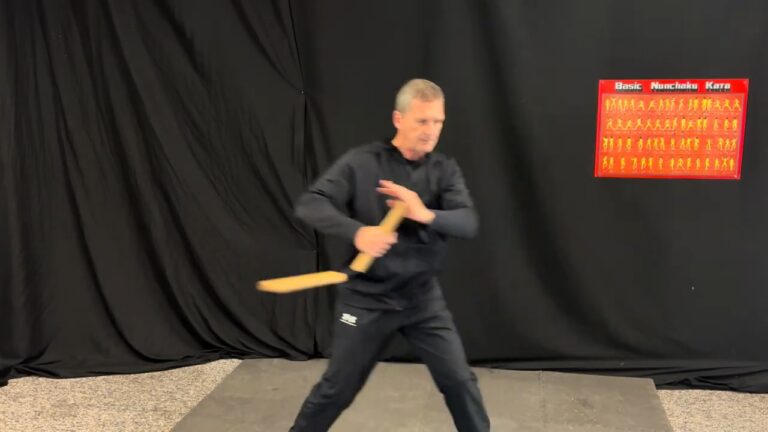
Learn a nunchaku waist technique with a control-hand grip that powers smooth transitions plus two-handed, one-handed, and loop variations.
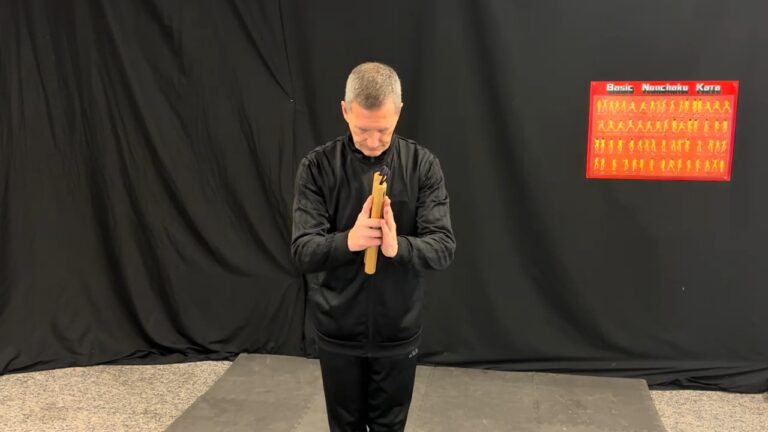
Hit a nunchaku training plateau? Discover why feeling stuck is normal, how real progress actually works, and why pushing through sets up your next big leap.
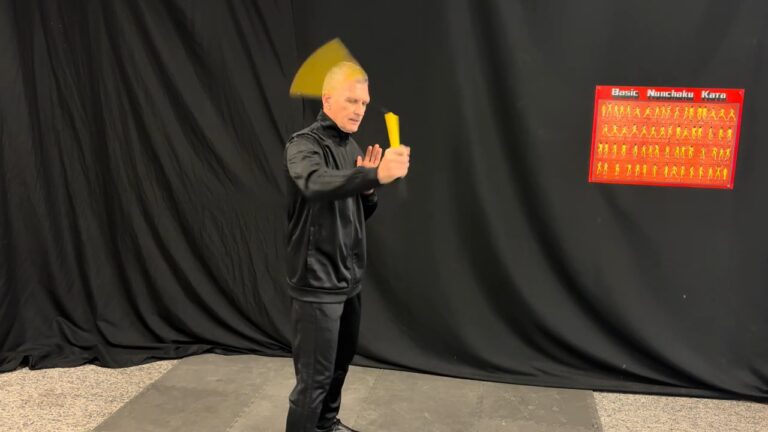
In Lesson 15, Alex Stick zooms out from any single technique to explain one of the biggest hidden benefits of nunchaku practice: it trains both hands to operate as a coordinated team.
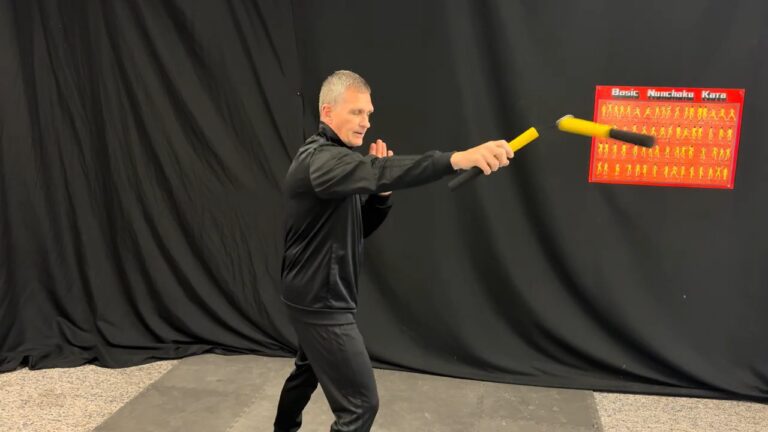
Bruce Lee's iconic nunchaku front jab, broken down.
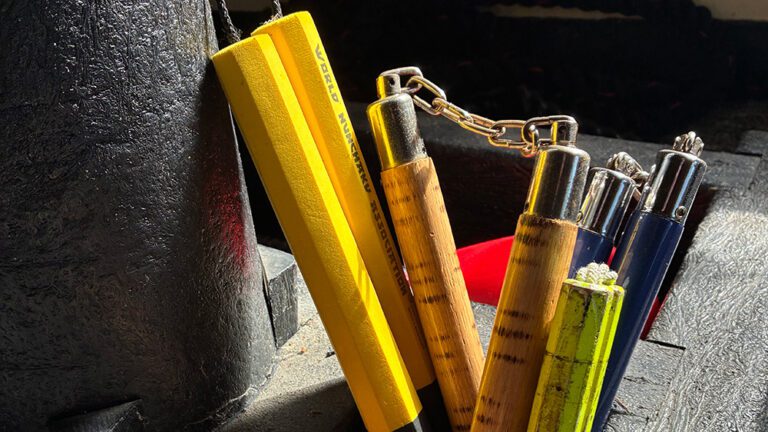
Lesson 13 is a little different from the technique lessons that came before it. Instead of a new combination or catch, you're going to learn when and how to move up from foam training sticks to a pair of wooden nunchaku — and why that upgrade changes everything about the way you train.
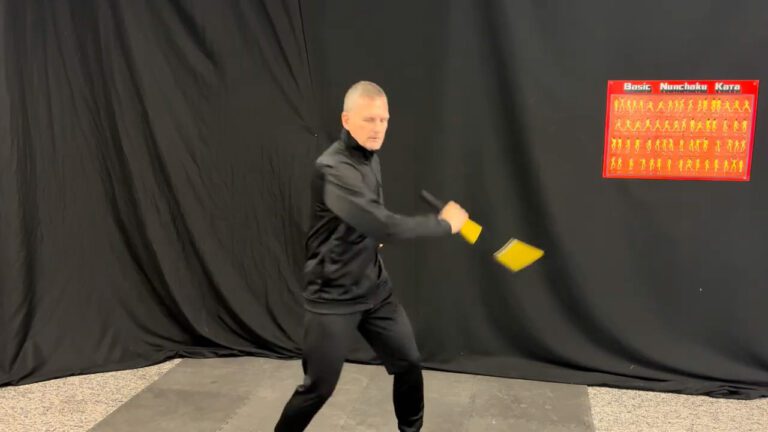
Lesson 12 introduces nunchaku waist wraps — wrapping the sticks around your waist and learning what that movement does for your control, your power, and your ability to flow from one side of the body to the other.
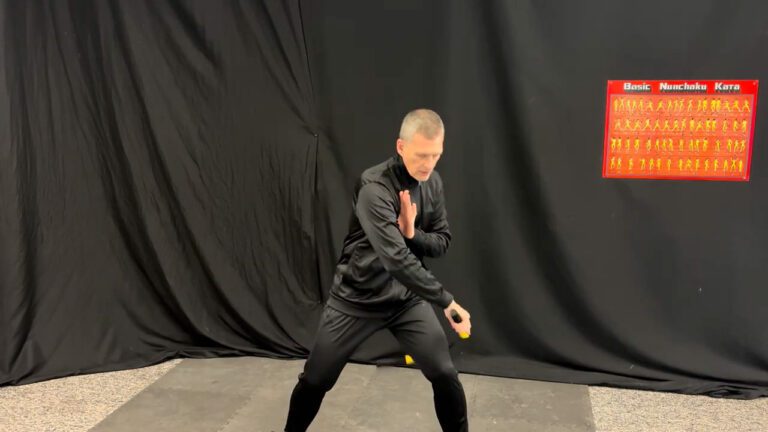
In Lesson 11, you'll learn one of the most useful tools in the entire series: a nunchaku grip change that lets you reverse your momentum, change directions, and completely redirect the flow of your sticks on demand.
In this lesson, Alex moves away from combat combinations to focus purely on dexterity and mobility. These behind-the-back techniques aren't fighting applications — they're training tools designed to build hand-eye coordination and comfort handling the nunchaku outside your direct line of sight.
Lesson 9 introduces the hardest combination in the series so far: a behind-the-back toss and catch.
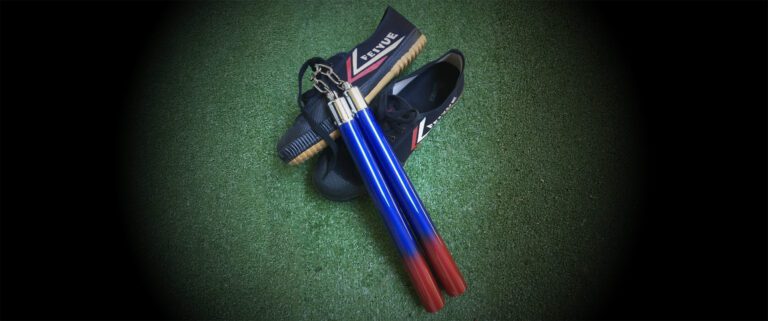
A nunchaku overhead strike combination: backhand swing, overhead strike, hand-to-hand pass, lasso, and downward finish.
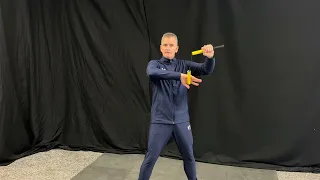
Learn a versatile nunchaku combination built on inverted grips, a butt-end jab, and rhythm-breaking strikes.
Learn the big swings — forehand, backhand, and overhead — plus the loop that turns a stiff, awkward swing into a powerful one.
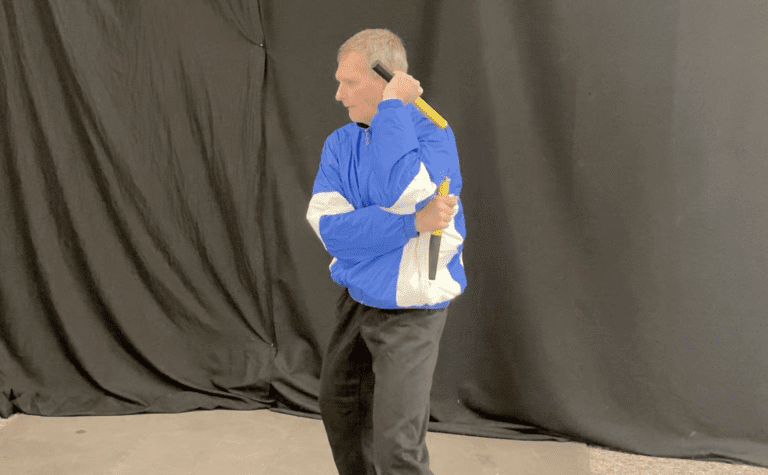
Lesson 5 takes the instinctive movement work from earlier in the series and points it at a skill every serious practitioner has to develop: nunchaku close-range fighting.
Instead of building another structured form, Alex introduces instinctive training — moving freely with the nunchaku instead of thinking through every technique.
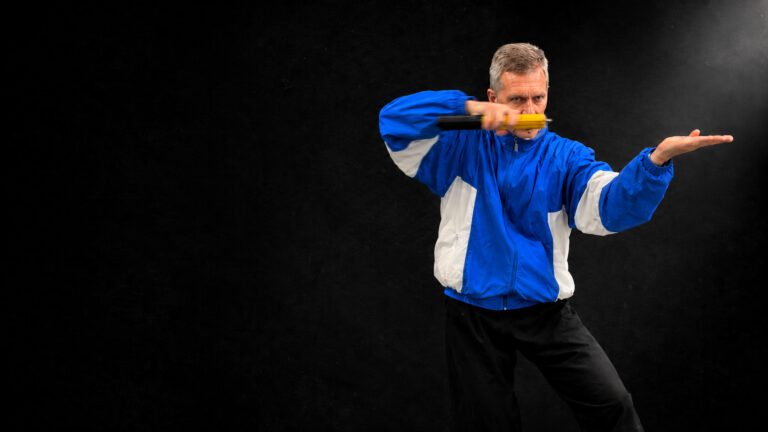
This short form builds on the first 2 lessons , but introduces more coordination between the nunchaku hand and the off-hand.
Welcome back to the Art of Nunchaku training series with Alex Stick, a 2x martial arts world champion, Martial Arts Hall of Fame inductee, and instructor with 40 years of nunchaku experience. In Lesson 1, Alex introduced a simple beginner…
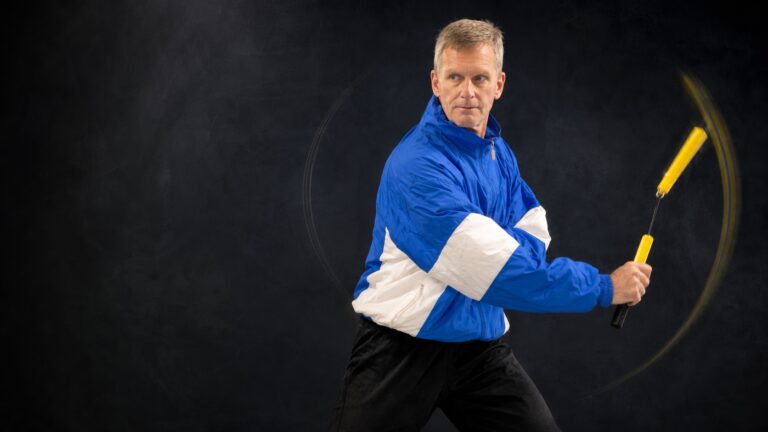
Welcome to the first lesson in the Art of Nunchaku training series with Alex Stick, a 2x martial arts world champion, Martial Arts Hall of Fame inductee, and instructor with 40 years of nunchaku experience. This 20-lesson series is designed to introduce students…